
What To Do When Your Dog Gets Lost: The First 24 Hours and Beyond
What To Do When Your Dog Gets Lost: The First 24 Hours and Beyond
By Mary Jane Gallagher

Approximately 1.22 million dogs were reported lost in the United States in 2024, making up about 72% of the more than 1.7 million lost pets nationwide that year. The good news is that the vast majority (63%) are found. Overall, it is estimated that around one in three dogs will go missing at some point in their lifetime, indicating the importance of being prepared for this possibility. As is the case with missing persons, the first few hours after a dog goes missing are vital. It is therefore essential to have a precise strategy in mind in case this should happen to your pet.
The First 24 Hours: Conduct a Physical Search
The moment you notice your pet has gone missing, take immediate action. Start by physically searching the local area. Look first around the house and in areas like basements or garages, where your dog could be hiding beneath furniture or inside boxes or storage furniture. Next, start looking around your neighborhood. If you’re new to town or in an unfamiliar area, use your smartphone to thoroughly explore the area by dropping pins on your phone’s map as you cover different areas. If you see neighbors or people living in the area you are visiting, show them a photo of your dog and, if possible, enlist their help. If you have a group of searchers, consider splitting up and searching in different areas. It is also a good idea to call local shelters if your dog cannot be found in a few hours. Check both local and regional shelters. If you have a neighborhood app, use it to send a picture of your dog and let others know it is missing.
The Power of Social Media
Another key step to take in the first few hours after a dog goes missing is to share your pet’s photo on social media, letting readers know the general area where you last saw your pet. Check if Facebook has lost and found pages and post the news there, too. Ask friends and family members to share the news and encourage their followers to do the same, increasing the chances of reaching someone who has seen or sheltered your dog.
Utilizing Dog Tags
A dog tag will make it very easy for a person with goodwill to contact you if they find your dog. Your pet may be microchipped, but having a dog tag with your phone number will make it much easier for someone who encounters your dog to contact you immediately. Invest in a good, sturdy collar and tags made in sturdy materials like stainless steel, titanium, or silver. Ensure that all characters—especially your phone number—are clearly visible.
What To Do A Week Down the Track
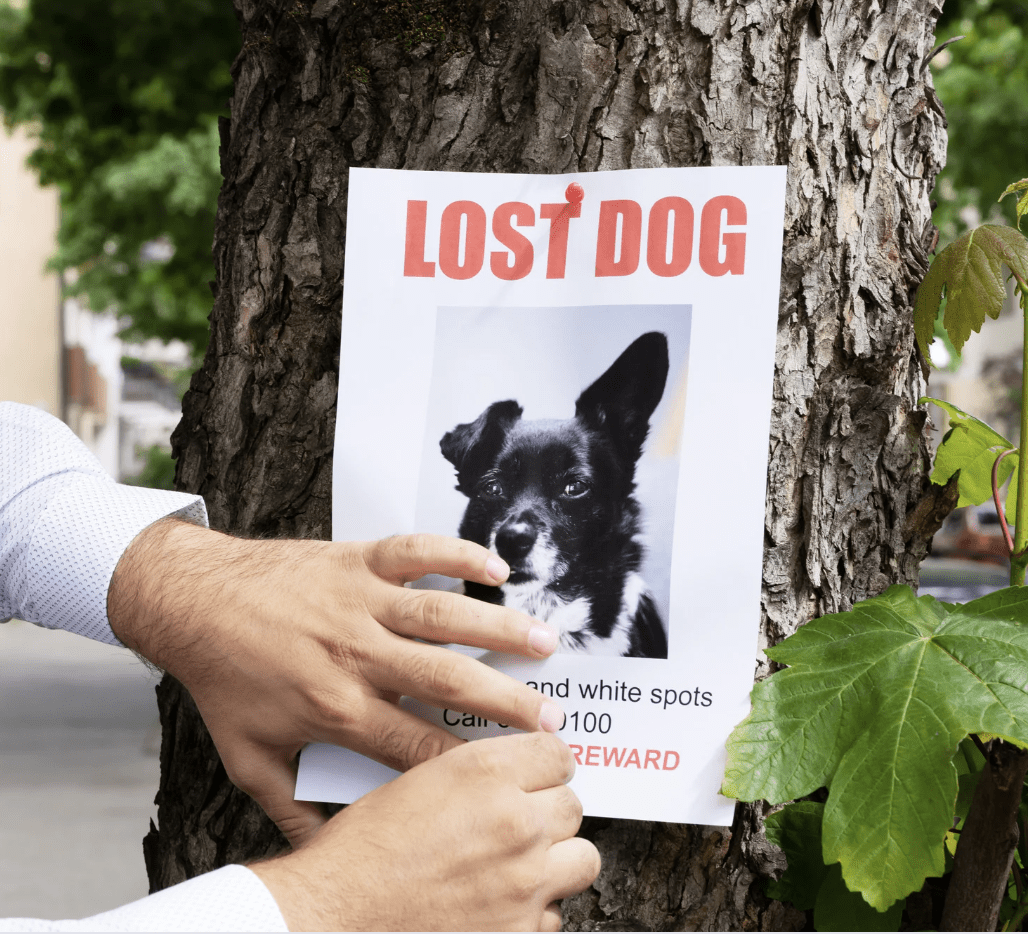
If you haven’t found your dog after a week, continue searching and using social media to spread the word. Upload videos and photos of your pet, highlighting any particular features that may help identify it. Consider creating posters or flyers with a clear image of your dog, a large, simple, easy-to-read headline saying “Lost Dog.” Continue conducting physical searches and consider revisiting previously visited locations. Dogs may wander but return to spaces they have frequented in the past, such as parks or malls.
What To Do a Month Down the Track
Continue to contact local shelters and the local police. Continue to use your neighborhood app to let neighbors know your pet is still lost. Consider hiring a pet detective at this point (or even earlier) if your efforts are unfruitful. Seasoned detectives typically have scent-tracking dogs that have proven successful in finding lost pets. They may also use surveillance equipment (including drones, motion-activated cameras, night vision equipment, and GPS tracking) to monitor areas where your pet may be present. Pet detectives also typically specialize in digital strategies, and they are adept at using social media, online forums, and lost pet databases to spread awareness and gather tips on potential sightings.
If your dog has gone missing, don’t wait until the next day to take action. Start searching in your area, use social media, and speak to neighbors and passers-by. Enlist the aid of as many people as possible to boost your chances of success. Contact shelters and the police, and consider hiring a pet detective for peace of mind.